
PlatformUPS monitoring
Find the weak battery before the outage does.
A UPS only gets tested when the power fails. 42Hz watches every unit every day, so the weak jar or the warm room gets fixed in a maintenance window.
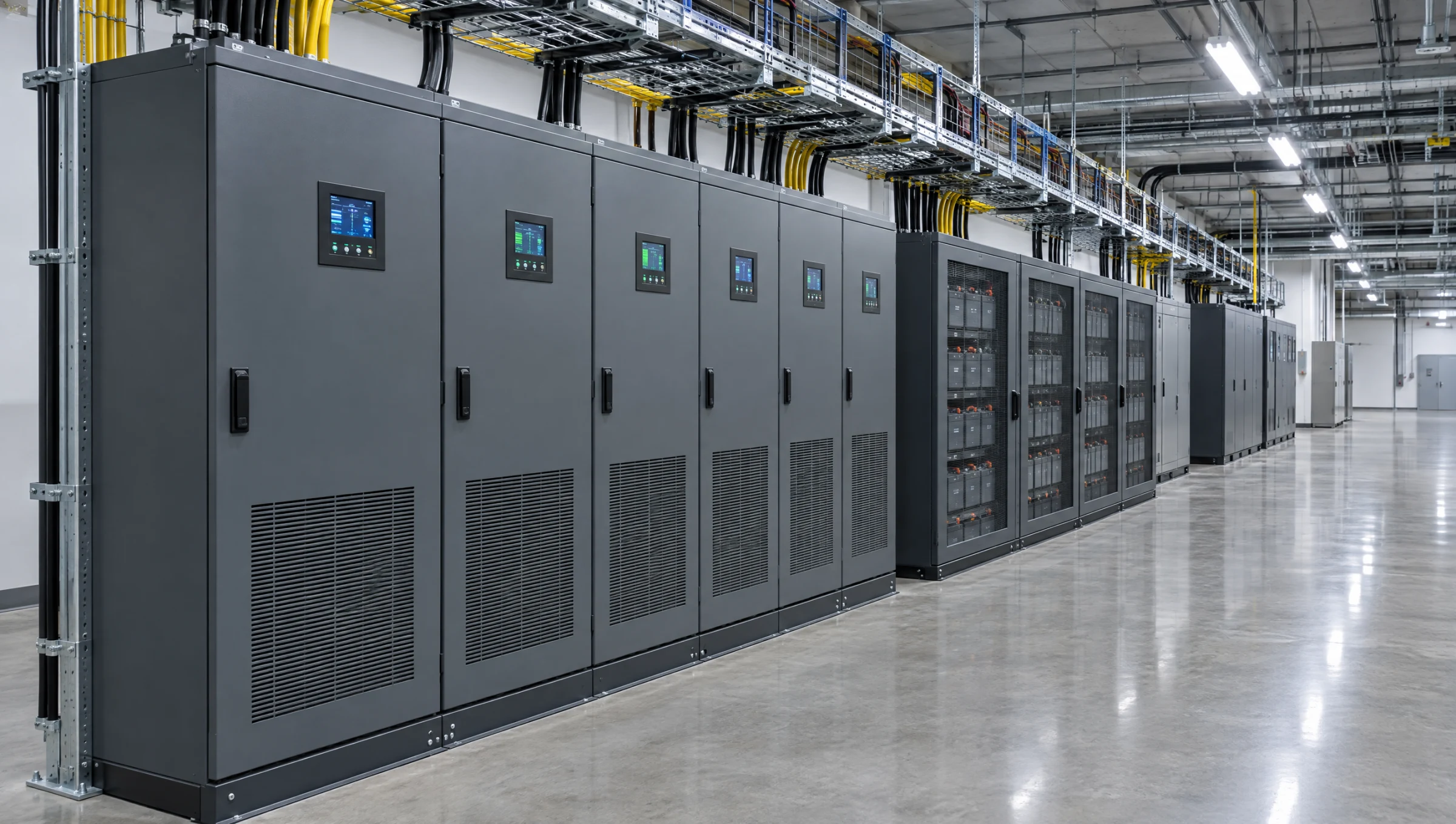
What it catches.
What goes wrong
What you’d see
42Hz
Batteries aging
A few jars aging faster.Resistance rising, float voltage drifting.
Replaced on your schedule.Not found during an outage.
Transfers to bypass
More often than it should.Sometimes for a second or two.
Every transfer logged.Next to what happened upstream.
Heat
The battery room running warm.Or fans working harder.
Caught before it costs battery life.With the cooling that’s falling behind.
Lost redundancy
A module trips.And N+1 quietly becomes N.
An alert straight away.Before the next failure counts.

What it reads.
Your UPS systems already report over the network.
- UPS network cards, over SNMP or Modbus
- Battery monitors, where installed
- Switchgear, PDUs and transfer switches
- Room temperatures from your building system
Common questions.
No. It works alongside them, and gets faults in the power and cooling fixed.
Yes, whatever the brand or age.
The UPS still reports battery voltage, temperature and every discharge. Battery monitors add detail on each jar.
Yes. Watch your customers’ UPS fleets and sell monitoring as a monthly service.