
PlatformRelay and switchgear monitoring
Know which breaker is slowing down.
Your relays measure far more than anyone looks at. 42Hz reads it without touching protection, and flags the breakers and relays that need attention.
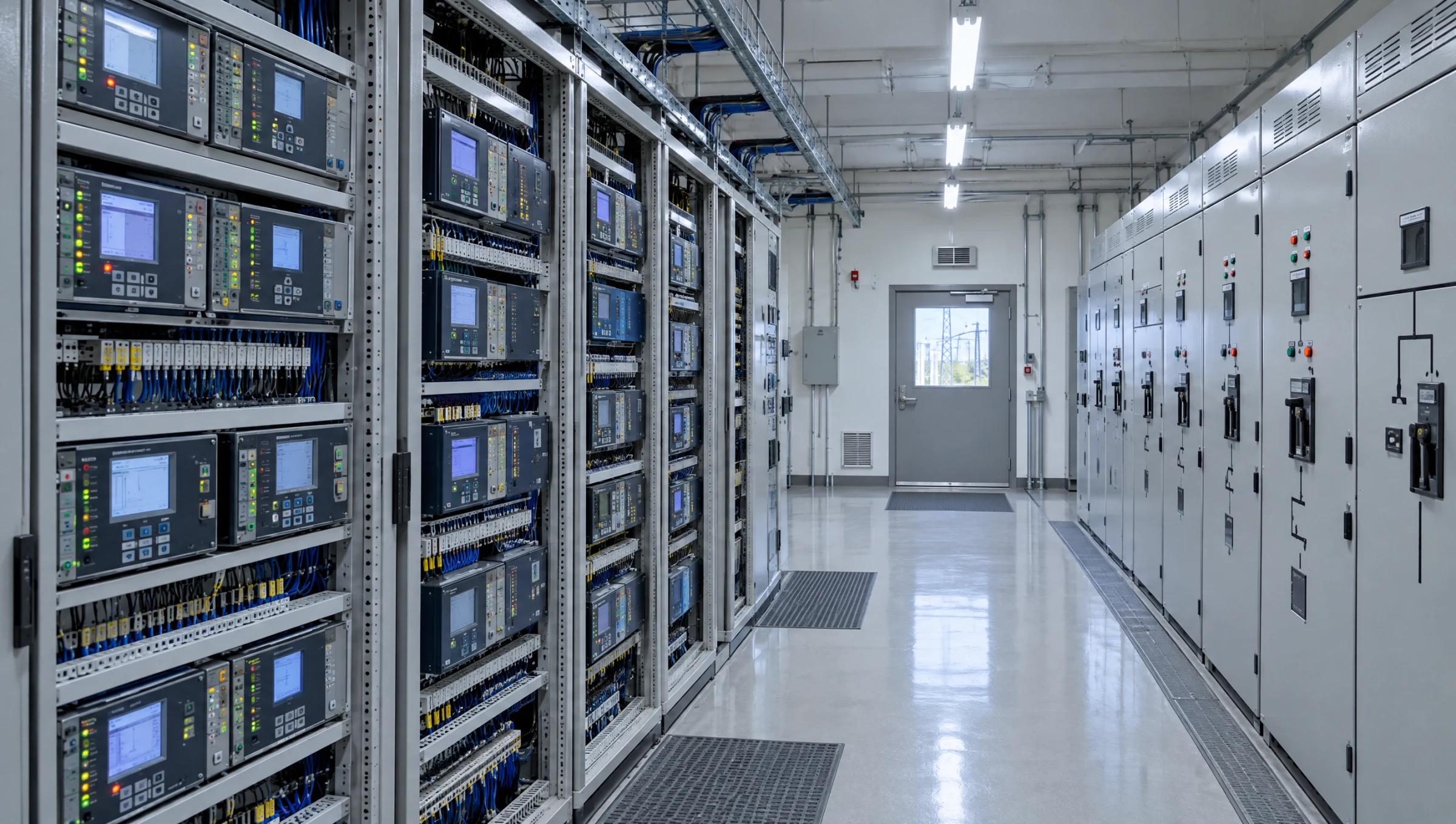
What it catches.
What goes wrong
What you’d see
42Hz
Breaker wear
Operations piling up.Contact wear near the limit.
Service by actual use.Not a fixed schedule.
Slow trips
Trip times getting longer.A few milliseconds at a time.
Flagged before it fails to clear.With every operation on record.
Relay problems
Self-test warnings.Or a relay that stops answering.
Raised as a case.So a gap in protection doesn’t sit unnoticed.
Station battery
DC voltage sagging.Or a DC ground appearing.
Fixed while there’s time.Every trip depends on it.
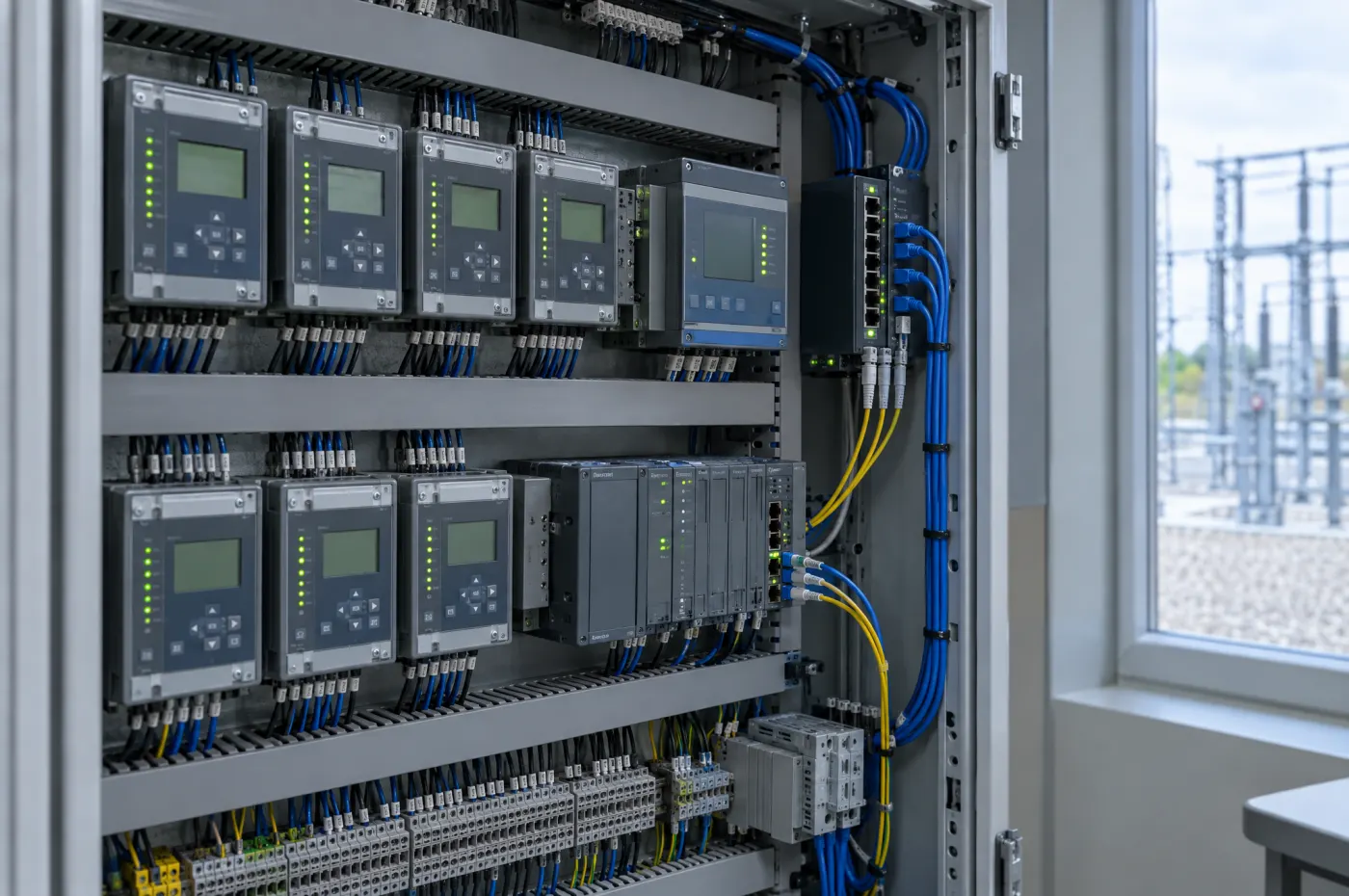
What it reads.
Nothing to rewire, and no change to protection.
- Relays, including SEL: currents, breaker status and wear
- Self-test alarms and event records
- Station battery and charger
- Meters, RTUs, SCADA and historians
Common questions.
No. Monitoring only reads. Remote control is separate, and off unless you turn it on.
No new sensors. It reads the relays, meters and RTUs you already have. Sites with no network get a cellular router.
It’s designed for NERC CIP environments, and every session is logged.
Yes, through RTUs or the historian. For anything unusual, our engineers build the connection.