
The Most Common Power Transformer Failure Modes
Most serious power transformer failures trace back to a few areas: windings, bushings, and the load tap changer, often driven by insulation breakdown, thermal stress, or moisture. Monitoring these specific failure modes is more effective than watching a single overall metric.
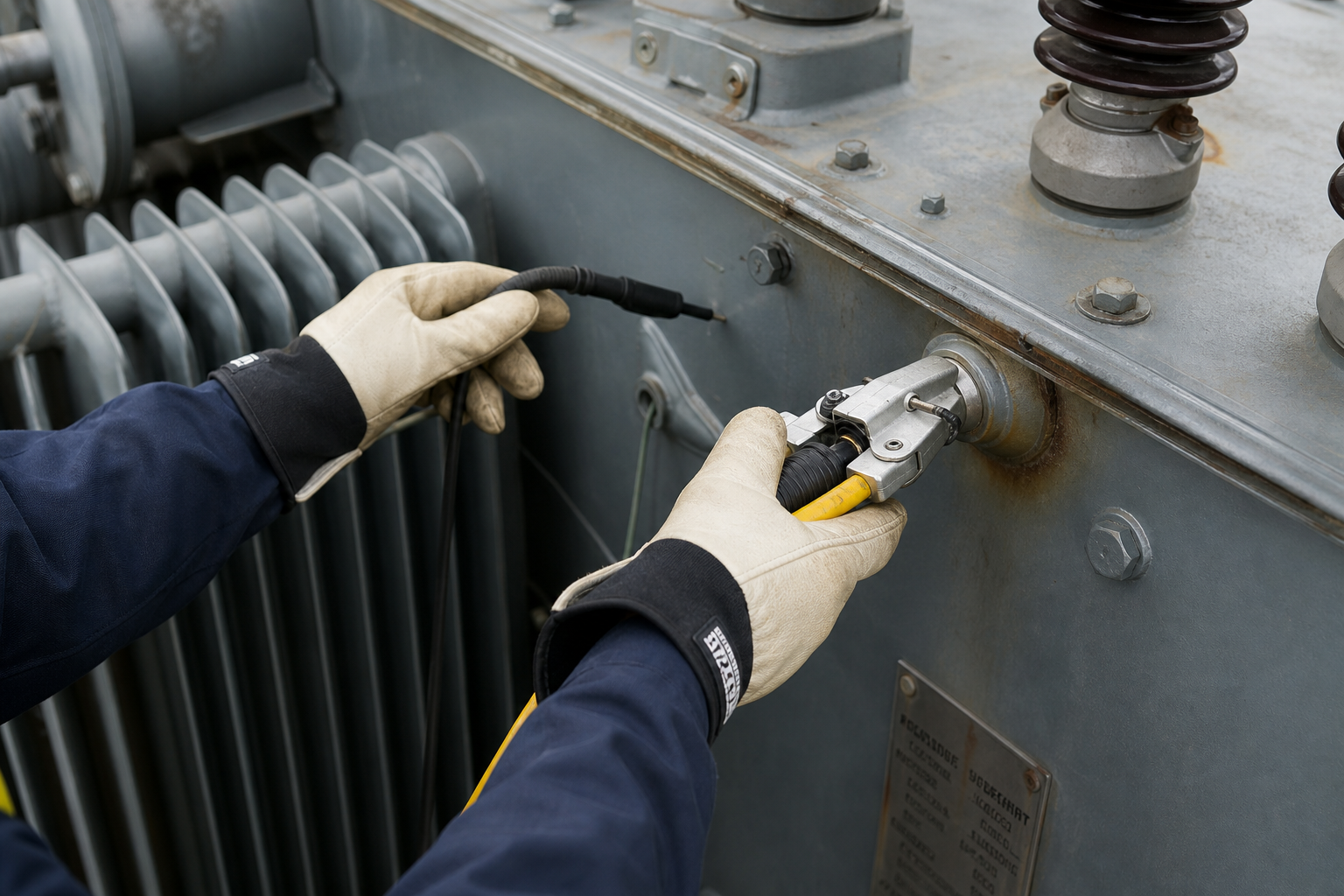
Windings
Winding insulation degrades under electrical and thermal stress over time. Partial discharge and hot-spot development are common early indicators, which is why these are high-value signals to monitor continuously.
Bushings
Bushing failures can be severe, sometimes leading to catastrophic damage. Trends in capacitance, power factor, and leakage current provide early warning before a bushing reaches the point of failure.
Load tap changers
The load tap changer is one of the few moving parts in a transformer, which makes it disproportionately failure-prone. Contact wear, timing drift, and contamination account for a meaningful share of in-service interruptions.
The common thread
Across these modes, the pattern is the same: failures develop gradually and show signals before they become outages. The value of monitoring is catching that development early and across multiple fault modes at once, rather than relying on any single measurement.
FAQ
Frequently asked questions
What is the most failure-prone part of a transformer?
The load tap changer is often cited, because it is one of the only moving components and is subject to mechanical wear.
Why are bushing failures so serious?
A bushing failure can escalate quickly and cause major collateral damage, so early trend warning is especially valuable.
Can one platform monitor all these failure modes?
Yes. Modern platforms aim to unify winding, bushing, tap changer, thermal, and PD signals into one health view rather than separate tools.