
What Is Partial Discharge Detection, and Why It Matters
Partial discharge is a small electrical discharge inside weakened insulation in transformers, bushings, and switchgear. It is one of the earliest warning signs of insulation breakdown, often appearing weeks or months before a fault. Detecting it and capturing the event quickly lets operators act before a developing fault becomes an outage.
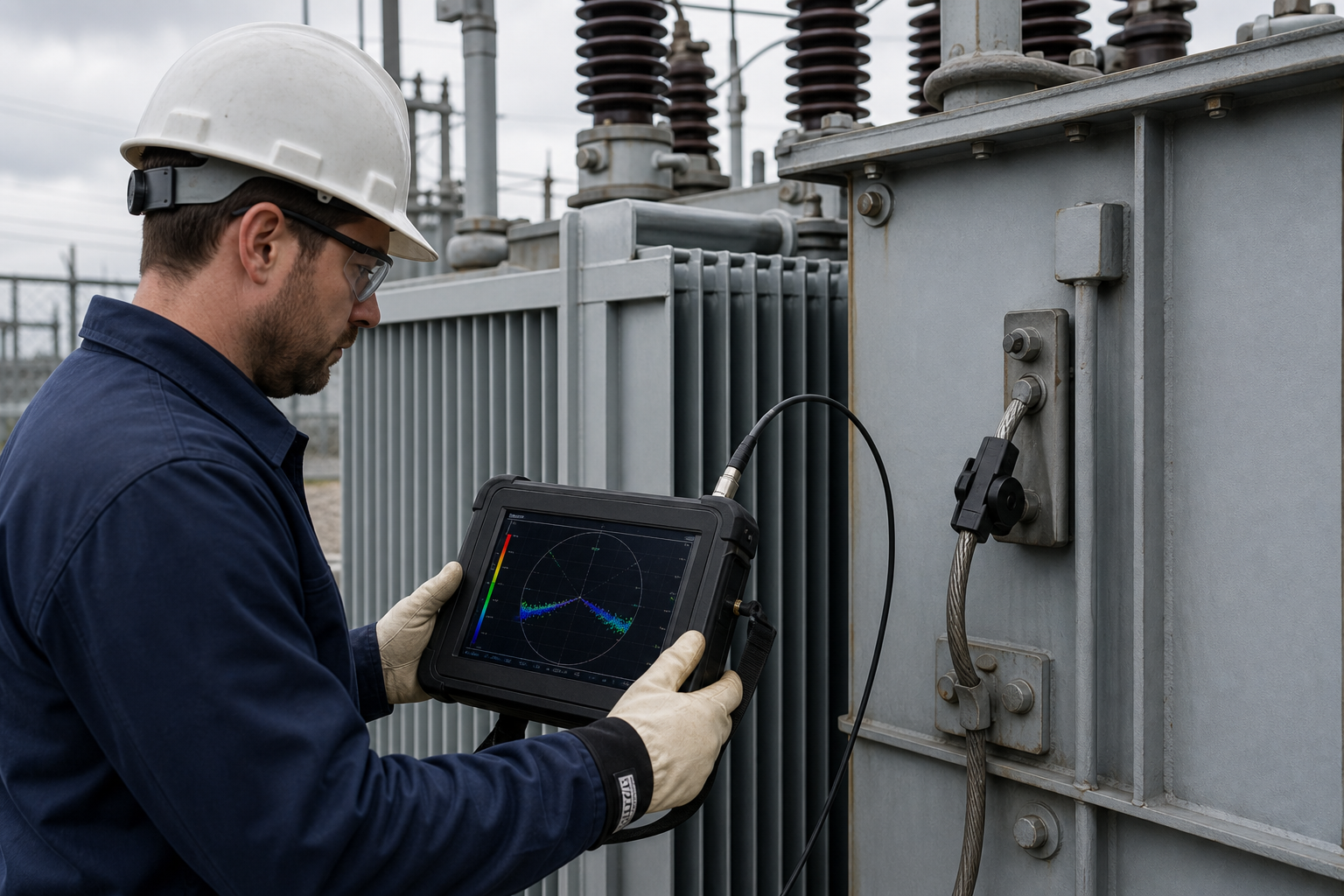
What is partial discharge?
Partial discharge, often shortened to PD, is a localized electrical breakdown that happens inside a small void or weak point in insulation without bridging the full gap between conductors. Each discharge is tiny, but PD is progressive. The activity slowly erodes the surrounding insulation, so what starts as a minor signal develops into a serious fault over time. Because PD appears early in that process, it is one of the most useful leading indicators of insulation-related failure in transformers, bushings, and switchgear.
Why capturing the event quickly matters
The value of PD monitoring is not only detecting that discharge is happening, but capturing the event the moment it appears so it can be acted on. 42hz runs on AWS cloud infrastructure and generates alerts and data snapshots within milliseconds of a signal arriving, so a developing pattern is flagged and recorded in near real time rather than surfacing in a later periodic review. The faster an event is captured, the more runway an operator has to plan an intervention instead of reacting to an outage.
How 42hz approaches partial discharge
Rather than watching a single sensor against a fixed limit, 42hz unifies signals across an asset and learns what that specific asset's normal behavior looks like. Deviations from that learned baseline are what trigger attention, which means slow, developing PD activity can be surfaced before it would cross a conventional alarm threshold.
FAQ
Frequently asked questions
How early can partial discharge predict a transformer failure?
PD activity often appears weeks to months before insulation reaches the point of failure, making it one of the earliest actionable warning signs.
What sensors detect partial discharge?
Common sensing methods include UHF, HFCT, and acoustic detection. 42hz unifies these signals into one monitoring layer rather than treating them in isolation.
Is partial discharge monitoring a replacement for dissolved gas analysis?
No. PD and DGA catch different fault modes and are strongest used together.